Marvel Rivals Scoreboards: Ask What the Number Helped the Team Do
A scoreboard summarizes recorded actions, not every reason a fight was won. Read a number alongside role, time, position and objective context before using it to judge a teammate or choose a practice task.
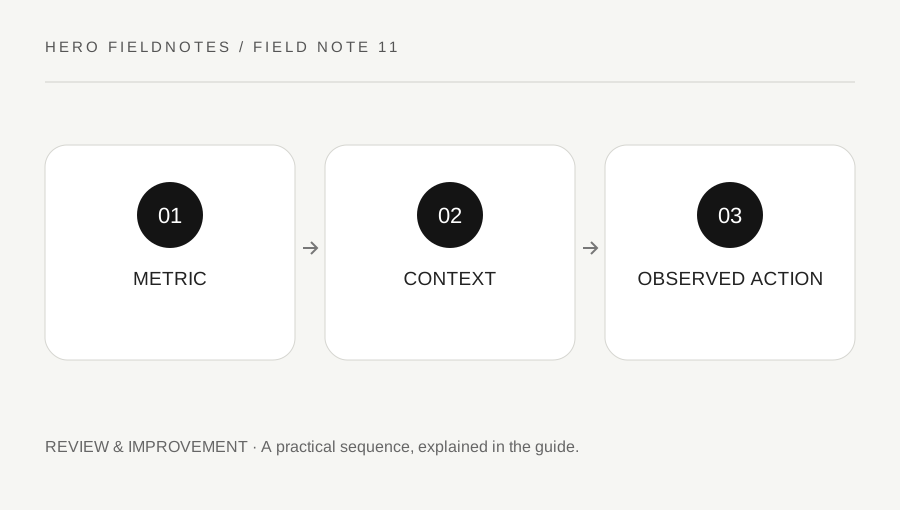
Original explanatory diagram. Examples illustrate a method or decision; they are not claims of personal testing.
Read the label before comparing totals
Identify which value the screen reports and the period it covers. Damage, healing, eliminations and other recorded values describe different actions. A large total does not automatically answer whether the action was useful at the important moment.
Keep hero function and match context visible. Different kits create different opportunities, and a long fight can generate a different total from a short decisive one. This page does not claim access to hidden matchmaking data or a formula that converts every statistic into contribution.
Use the current interface and official hero descriptions to understand what the player was trying to do. Do not assume a role label or one number describes every responsibility. Some useful actions involve position, pressure or protection that a single headline value cannot fully explain.
Connect the number to a specific encounter
Choose one fight and ask what the recorded action enabled. Damage can create an opening, pressure a route or be recovered without changing the objective. Healing can sustain a useful position while still depending on line of sight and teammate behavior.
Avoid a universal claim that one category is always meaningless or always decisive. The task is adding context, not replacing one simplistic ranking with another. A short recording or honest reconstruction can show when an action mattered.
For a worked example, a player has a high damage total but repeatedly attacks a protected target while a more urgent threat isolates the back line. The review asks about target and timing rather than denying the damage occurred. Another player with a lower total may have supplied pressure at the moment the team could act.
Keep opportunity and survival in the comparison
Time alive, time in useful range and available team support affect the opportunities to produce a number. A teammate repeatedly returning alone may have low totals because the arrival plan failed, not because the person refused to contribute.
Check whether the team's positioning made the expected action possible. A healer cannot be evaluated fairly without considering whether the target was reachable under the current kit and geometry. A damage role also needs a usable view rather than a demand to increase a total from behind an obstructed line.
Do not invent a normalized score from incomplete information. A private practice note can remain qualitative: missed support connection, late arrival or pressure not used. That can be more actionable than a ratio that appears precise while omitting the context that actually explains it.
Choose one review question instead of a blame label
Turn the observation into a task: identify the target that would change the fight, preserve a support line or arrive with teammates. Keep the question within the player's control and test it in a few relevant encounters.
Avoid posting a scoreboard as proof of another person's motives or ability. It does not show every decision or circumstance, and a public accusation rarely improves the next shared action. Use supported reporting for actual conduct issues rather than a low number alone.
Finish with metric, context and one observed action. Scoreboards can start useful questions, but the learning comes from linking them to the fight. A careful review recognizes recorded output without pretending that the largest number automatically identifies the best decision or that a small total explains itself.
A practical checklist
Choices are saved in this browser. Reset them here or clear this site’s browser storage.
Questions that come up
Does the highest total prove the best contribution?
Not by itself. Timing, targets, position and objective context matter.
Should a low total automatically trigger blame?
No. Inspect opportunities and decisions before making a judgment.
Does this page calculate a hidden performance rating?
No. It offers a qualitative review method and has no access to match or account telemetry.
References & scope
Background references checked on 18 October 2026. Worked examples and diagrams are original teaching material.