Marvel Rivals Return Routes: Rejoin a Useful Fight After Respawning
The shortest route back is not always the route that reconnects you with the team. Read the current objective and teammate positions before turning a respawn into another isolated entry.
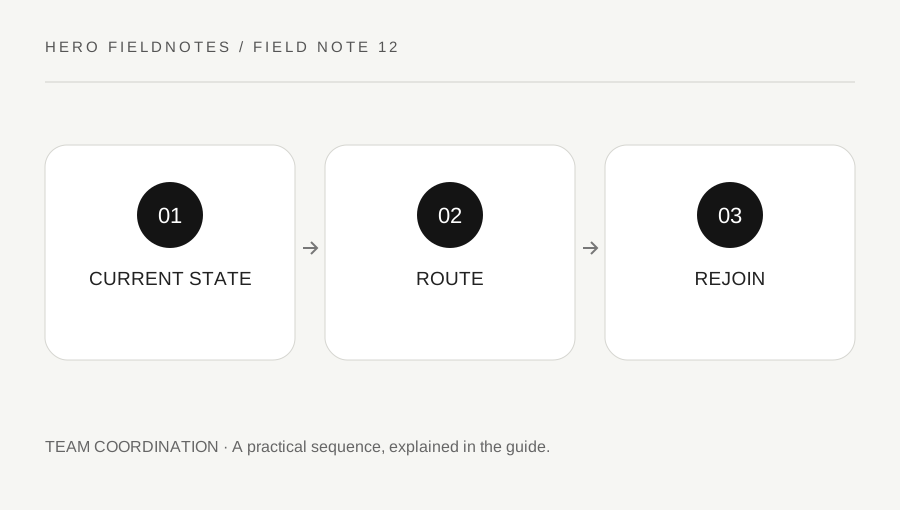
Original explanatory diagram. Examples illustrate a method or decision; they are not claims of personal testing.
Update the fight state before moving
Look at the current objective, living teammates and their positions. The encounter that existed when you were eliminated may already be over. A remembered enemy position can be stale by the time you return.
Use the actual respawn and mode interface rather than a fixed timer from another season or map. This guide does not publish permanent wave or travel numbers. It asks what useful team action is available when your hero is ready again.
Name whether the group is still contesting, withdrawing or preparing another attempt. Those states require different arrivals. A solo sprint toward the last visible fight can create another elimination without helping the surviving players or the next objective window.
Trace a route that preserves the connection
Identify the destination where you can contribute and the cover or movement needed to reach it. A shortcut can expose the hero to an opponent who now controls the lane. A slightly different approach may preserve a support line or allow the team to move together.
Use the current hero's movement and map geometry. Do not rely on an unavailable cooldown or an old route changed by destruction. If an environmental opening changed during the previous fight, inspect the new sightlines rather than following the original path automatically.
For a worked example, two teammates are returning while the rest of the group has already withdrawn. They choose a reunion position for the next attempt instead of entering the objective separately because it is the shortest path from spawn. The route serves a shared action, not merely physical proximity to the point.
Use urgency without losing the purpose
Some objective states require an immediate response, while others allow a deliberate regroup. Read the actual interface and team situation. Avoid both universal waiting and universal rushing; either can waste the useful window when applied blindly.
Communicate arrival in practical terms: route, ability readiness and whether you can support the next action. A teammate needs to know when help becomes usable, not only that you are moving somewhere on the map.
If the route becomes blocked, update quickly. Continuing into a lost lane because you announced it earlier does not create support. Keep the alternative and the objective visible so the group can choose a response based on the new information.
Review repeated isolated arrivals
After a difficult sequence, mark when each player could contribute to the same fight. Repeated single entries can be a timing problem even if every individual tries hard to reach the objective. The correction may be a clearer reunion point or readiness call.
Choose one next-session check, such as reading living teammates before leaving spawn. Keep it small enough to perform during normal play. A useful habit should improve awareness without preventing an urgent action the actual objective requires.
Finish with state, destination and arrival purpose. This complements broad objective timing by focusing on the specific return after elimination. A successful route is one that places the hero into a useful shared action with the current kit and map, rather than merely minimizing the seconds spent traveling toward a fight that may no longer exist.
A practical checklist
Choices are saved in this browser. Reset them here or clear this site’s browser storage.
Questions that come up
Is the shortest path always the best return?
No. Cover, control and the current team position can make another route more useful.
Should I always wait for every teammate?
No universal rule applies. Read the actual objective urgency and available shared action.
Does this page give fixed respawn timings?
No. Use the current mode and interface. The guide focuses on the decision after becoming ready.
References & scope
Background references checked on 18 October 2026. Worked examples and diagrams are original teaching material.