Marvel Rivals Hero Swaps: Change the Missing Function, Not Just the Portrait
A swap is useful when it addresses a specific problem and fits the player’s ability to use the replacement. Identify what the team lacks before treating a different hero as an automatic answer to one lost fight.
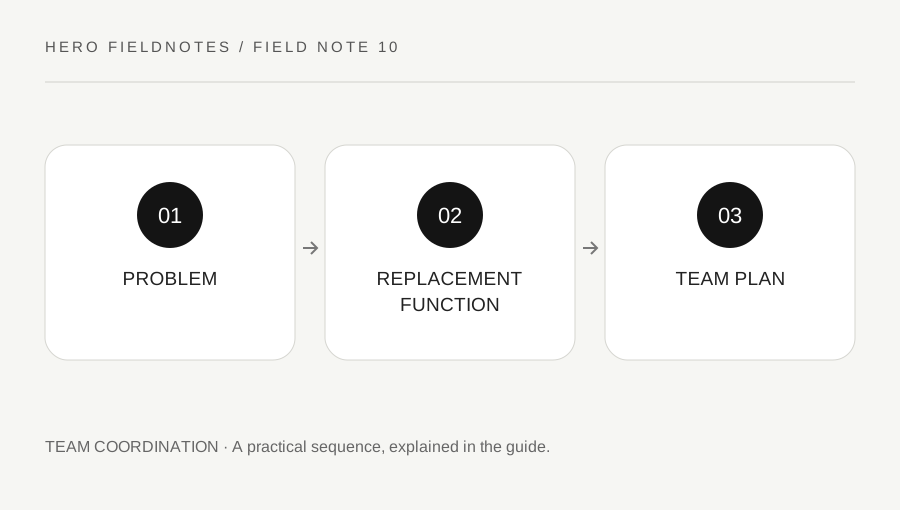
Original explanatory diagram. Examples illustrate a method or decision; they are not claims of personal testing.
Describe the problem without a tier-list label
Name the practical issue: a route cannot be contested, a teammate is repeatedly isolated or the team lacks a useful response to an observed threat. “This hero is bad” does not establish which action needs to change.
Read the current roster and abilities. Updates and team-up changes can alter the comparison, so an old counter chart should not override the live kit. The site's composition guide covers broader team planning; this page focuses on one swap decision inside a session.
Keep the last encounter in context. A poor arrival, blocked support line or unfamiliar control can explain a loss without requiring a new hero. The first question is whether the current kit lacks the needed function or whether the team did not use a function it already had.
Choose a replacement you can perform with
Compare the desired effect with your familiarity and the actual map. A theoretically suitable hero can be unhelpful if you do not know its basic actions or cannot reach the relevant position. Practice options before relying on them in a pressured match.
Check any current resource or selection consequences in the interface. This page does not promise a fixed ultimate-charge carryover or a permanent swap rule. Read the actual mode and current game rather than repeating a number from an old guide.
For a worked example, a team needs a practical response to an elevated threat. One player considers a familiar hero with an appropriate view and attack rather than selecting an unfamiliar portrait solely because a video calls it a counter. The replacement is evaluated by the action it can supply now.
Tell teammates what the change is meant to do
Use a short statement of function and readiness. If the swap removes a support or protection tool the team was relying on, make that tradeoff visible. A changed portrait on the selection screen does not guarantee everyone understands the new plan.
Check team-up dependencies through the current system. A composition change can affect a related ability or expectation, but the exact relationship should come from the current roster and interface. Do not assume an old pairing remains available forever.
Avoid demanding a swap as a form of blame. Share the observed problem and a possible function, then coordinate within the actual team's choices. A useful suggestion should improve the plan rather than turn a tactical question into an argument that removes communication.
Review the new action rather than only the next result
After the change, ask whether the intended function appeared and whether teammates could use it. A win immediately afterward does not prove the swap was the sole cause, while a loss does not prove the idea had no value.
If the function did not occur, identify whether the issue was knowledge, position, timing or an incorrect expectation of the kit. That diagnosis can guide practice or another team adjustment without cycling through the roster after every elimination.
Finish with problem, selected function and observed tradeoff. A deliberate swap changes a team's practical options. Its value comes from a usable response to a real situation, not from replacing one portrait with another and expecting the game to solve the original positioning, timing or coordination problem automatically.
A practical checklist
Choices are saved in this browser. Reset them here or clear this site’s browser storage.
Questions that come up
Does one lost fight mean the hero must change?
No. Positioning, timing and execution can explain the result. Identify the practical problem first.
Does this guide promise a fixed charge carryover?
No. Read the current mode and interface for resource consequences.
Should a counter chart override familiarity?
Not automatically. The player must be able to use the needed function in the actual encounter.
References & scope
Background references checked on 18 October 2026. Worked examples and diagrams are original teaching material.