Marvel Rivals Cooldown Calls: Tell the Team What Function Is Missing
A cooldown matters because it changes what the team can do next. Communicate the missing function and a practical timing cue, then avoid spending every tool on the same moment without a follow-up.
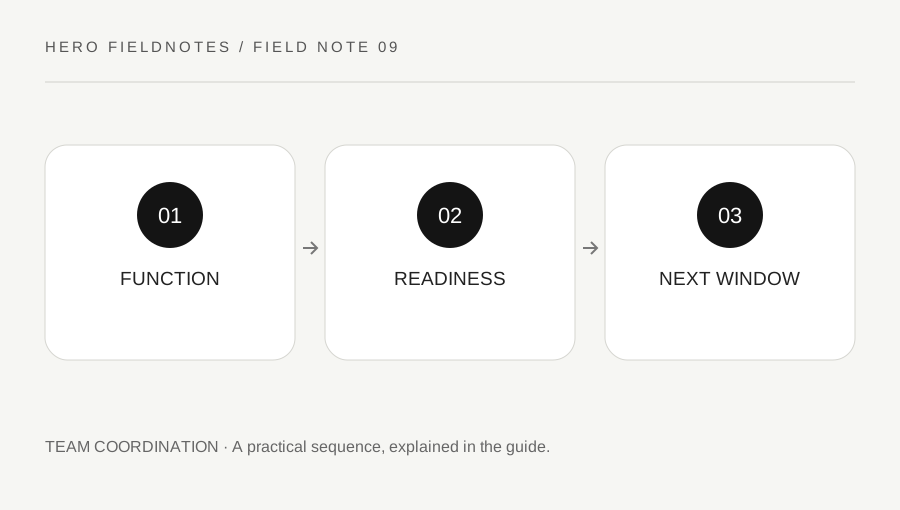
Original explanatory diagram. Examples illustrate a method or decision; they are not claims of personal testing.
Name the effect in plain language
Read the current hero description and identify what the ability supplies: movement, protection, recovery, information or pressure. A teammate may understand the practical function faster than an unfamiliar ability name.
Keep the actual state visible. An ability available at the start of an exchange may no longer be ready when the next push begins. Do not communicate from memory or assume another player's cooldown matches yours. Hero changes and updates can alter the effect or timing.
This page addresses ordinary ability cycles, separate from the site's ultimate-management guide. The goal is helping teammates understand what support or action is temporarily unavailable, without publishing a permanent cooldown chart or pretending every hero follows the same sequence.
Connect the call to a team action
A useful call explains what the missing effect changes: cannot supply the planned protection yet, need to preserve cover or ready to support the next move. A bare number without context can be less helpful than a clear statement of function.
Keep timing honest. If the exact remaining time is visible, communicate it appropriately; if uncertain, do not invent precision. The purpose is coordinating readiness, not narrating every icon continuously.
For a worked example, a team plans to cross a pressured lane while the relevant defensive function is still unavailable. The player says so before the group moves. Teammates choose a protected wait or another route instead of crossing and discovering afterward that the expected support was never ready.
Avoid overlapping tools without a purpose
Two abilities used together can be useful when their effects support the same planned action. They can also be redundant if both solve a small problem while leaving the next moment unsupported. Read the actual interaction and result rather than assuming simultaneous effects always mean good coordination.
Choose which function is needed first and what remains for a response. This does not require a rigid script for every fight. It is a way to keep the team's options visible while opponents and the objective change.
If the first ability fails to create the intended opening, reassess before automatically spending the next one. A blocked line, unavailable teammate or changed opponent position may make the original plan unsuitable. Resource use should follow the real situation, not the order someone rehearsed earlier.
Review the missing window
After the encounter, identify when the team expected a function and whether it was actually ready. A late call is a different issue from an effect used correctly but misunderstood. Keep the review specific enough to suggest a change.
Use the practice environment to inspect one ability's current behavior if needed. A controlled test can answer reach or timing questions, while a live match tests when the effect is useful. Do not confuse those two kinds of evidence.
Finish with function, readiness and intended action. This makes cooldown communication a team decision aid rather than a constant stream of numbers. A useful call preserves options and prevents an assumption about support from becoming an avoidable commitment, while leaving room to adapt when the fight no longer matches the original plan.
A practical checklist
Choices are saved in this browser. Reset them here or clear this site’s browser storage.
Questions that come up
Is saying a cooldown number enough?
Not always. Explain what function is unavailable and which team action depends on it.
Should abilities never overlap?
They can work together when the combined effect has a purpose. Avoid redundant spending that leaves the next moment unsupported.
Does this page provide fixed current cooldown values?
No. Read the current hero description and interface for exact values.
References & scope
Background references checked on 18 October 2026. Worked examples and diagrams are original teaching material.